Tuesday, January 31, 2012

Show Me Your Balls Challenge

There is a chart floating around Facebook that shows Ball canning jars logos over the years.  I thought it would be fun to see when some of my jars were from.  Based on that chart, it looks like the jars I have sitting on the counter waiting for me to decide what to do with because they are too chipped for canning were made sometime between 1923 and 1933!  The jars I borrowed from my mom and a few of mine, as demonstrated by the middle rubbing, were probably made in my lifetime, sometime since 1975, as evidenced by the registered trademark symbol.  Most of my jars were from sometime between 1960 and 1975 though!  I guess some canning granny stopped canning or something and that's how I got them off Freecycle, because they've clearly been around the block a few times!

I didn't go through all my jars, since I didn't want to dig them all out, so I might find jars from other eras as we eat up our homecanned goodies.  I'll definitely be comparing them to this chart:
whenever I come across any jars that look different to see when they were from though!  Canning jars certainly are a lot more interesting (and environmental friendly) and thrifty than one time use cans from the store!  Every jar is a little piece of history in a way.

So here's the challenge:  If you have any canning jars around, check them out and see when they are from.  Even if you don't, but know someone else that does can, print the chart out and take it with you to see what part of history they're canning from.  Either do a crayon rubbing like I did and post it somewhere on the internet to share and post a link, or just post the dates you have as a comment, but I really hope to see lots of rubbings so I can be more connected to that piece of history as well.

Monday, January 30, 2012

Meal Plan Monday--January 29-February 5

I've been running on darn near empty lately (please hurry back warm weather and sunlight!), so this week's meal plan reflects that in the mass quantities of comfort food present, especially in the form of potatoes!  I'll also be trying a couple new recipes this week, so hopefully I'll get around to posting those if they work out...along with a bunch of recipes I've been meaning to post and haven't done yet (vegetable lasagna, anyone?).

Monday: cheesy potato soup (new recipe)

Tuesday: venison roast, potatoes, carrots

Wednesday: crispy cheddar chicken (new recipe), mashed potatoes, broccoli

Thursday: Mexican egg rolls
Friday (my 1 year blogiversary!): pasties
Saturday: fettuccine alfredo & sauteed mixed veggies

Sunday: pizza (I think there is some football game on somewhere?)

Saturday, January 28, 2012

What Can You Buy With $20?

This image, originally from My H.E.B Texas Life magazine's January 2012 issue, caught my attention when it was shared in The Dinner Garden's blog and on their Facebook page (an excellent organization, worthy of your support if you have the means to help them) a little over a week ago.  Several people commented that there is no way it would cost that little to buy all that stuff where they live, so I thought it would be an interesting idea to see how much this stuff would cost where I usually shop.  Since this list didn't specify whether the items were on sale or not in the graphic, we went by sale prices when applicable and regular prices when not (I think the only thing on sale was the kidney beans, but since I had my husband and son do this while I was doing the real shopping, I'm not 100% sure).  So here are the prices we found on a random day at a store in Michigan:

1 lb boneless skinless chicken breasts: $2.99

5 lbs potatoes: $2.99 (we found it interesting to note that organic potatoes were the same prices as conventionally grown potatoes!)

4 piece steamable cob corn: $2.69 (fresh corn was 4/$1.00)

1 lb oranges: we called it $1.00, since they weren't priced per pound, but 1 orange, weighing about 3/4 lb cost $0.79

1 gallon skim milk: $2.99

1 lb ground beef (couldn't find a percentage on the label): $3.99

32 oz tub of light vanilla yogurt: $1.93

18 oz canister of oatmeal: $2.19

1 lb frozen green peas: $1.25

1 lb dried kidney beans: $1.50

For a total of $23.52, so if the grocery budget was $20, we'd have to put something(s) back from this list for the week!  Still, if some of the items were on sale, it is very possible.  How about where you live?  Go ahead and click the print button below, take the list to the store next time you go and price out the items on this list, then report back your findings to see how prices compare elsewhere.

Friday, January 27, 2012

This Sh%# is BANANAS!


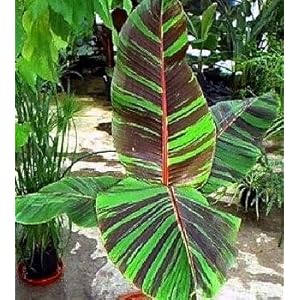
Image blatantly from Amazon, where you can buy these seeds
The USDA released a new, updated plant hardiness map this week, for the first time in years.  According to the new map, we are now in zone 6a instead of 5b!  For those in warmer climates, you might not understand how exciting this is in terms of the plants we can grow here (although not exactly thrilling because of the broader implications of climate change!).  I can't even count how many times through my relatively few years of gardening that I've wistfully looked at some plant or another in a seed catalog and wished I could grow it here, but it just wasn't possible, at least not outdoors.  When I saw this change in hardiness status, I had to see what I could add to my possibilities.

Some, like avocados and lemons were decidedly long shots and, as expected, it is still much too cold here (give it 50 years or so) to grow these in Michigan.  I did have one super exciting discovery of something I could grow here: bananas!  That's right: it is possible to grow bananas in Michigan.  Not all varieties, mind you, but there are one or two edible varieties that will put up with the cold temperatures and possibly (with a much increased chance, now that we are considered zone 6!) of actually bearing fruit.  After doing a big of research, I decided I wanted to grow Darjeeling bananas.  From what I've read, it is hardy up to zone 5, but is unlikely to produce fruit in anything lower than a 6 or 7.  Sounds like a worthwhile gamble to me (especially since a reader of this blog was generous enough to fund this project)!
Pretty, too!
Here's a minor hitch though: according to the lease, I can't plant trees, bushes, or shrubs (notice: nothing in the lease says I can't have a garden, like some people who stop by this blog from time to time seem to have trouble wrapping around their brains) without management approval and I don't know that banana trees are part of their vision for the trailer park.   However, containers are allowed.  That's why there isn't an issue with my blueberry and raspberry bushes, because they are in planters.  So, I'll be growing bananas in planters.  Yes, it is possible.  Apparently, a 15-gallon or larger planter is a suitable home for these banana-beasts.  That will also give me more options for winter storage.  I can either mulch the heck out of it (building an insulated box around the base or something to keep the roots warm too) or move it into a warmer location, like inside an out building like a garage or barn.  Plus, when we move, assuming I (or the cold) haven't killed it off, we can take it with us!  How's that for bananas?

I do have one confession though.  I don't like bananas.  I don't see that as a problem with this project though, since A) everyone else in my family loves bananas, B) these are not the same variety as store bought bananas, so I'm sure they would taste different, and C) if you'd only ever had a store-bought tomato, could you actually say that you didn't like tomatoes?

One last thought, further proof I've gone bananas:  I'm also going to grow pineapples this year, but more about that in a future post.

Tuesday, January 24, 2012

2012 Garden Plan

Discovering my seeds were moldy when going to plant some lettuce in the house the other day prompted me to finally (by many people's standards) figure out my garden for the year.  I decided, since it is such a depressing topic to think about right now, not consider the driveway as a place to grow anything.  I will instead focus on the rest of the lot, do what I can with it, and maybe if I can scrounge up the resources to do something with it, add the driveway as a container garden area later.

When looking over what I wanted to plant this year, I discovered that the loss of the driveway area as planting ground wasn't as bad as I first thought.  I decided not to do corn this year (unless I can find some free blue jade corn seeds somewhere) since I've never had much luck growing full sized corn in containers.  I also decided not to grow sunflowers, since we haven't been eating very many of the seeds like I thought we would.  I also decided not to grow pumpkins, since I'm unlikely to be able to grow anything as big as my husband and the kids would like to carve and I'm hoping we'll be moving before Halloween anyway (anything that won't be done by the time our lease is up will be grown in containers).  With the ground behind the house already torn up from the tree that was back there and everything else they were doing back there, it would make sense to use that as ground for planting this year as well.  As such, I decided I have room to plant a few potatoes (maybe experiment with sweet potatoes?) in containers, have a watermelon patch behind the house, grow peppers (bell and jalapeno), and grow spinach, carrots, onions, rutabaga, beets, and tomatoes in "official" garden areas, the beds along side the house and my garden box.

In the front yard, I'll be growing spinach, snap peas, more tomatoes, broccoli, cauliflower, cabbage, carrots, various herbs (I haven't decided what all will be grown for herbs, but I have an area in mind to dedicate toward them!), cucumbers, more watermelon, beets, onions, rutabaga, lettuce, cantaloupe, blueberries, raspberries, and zucchini.
In my patio area, not diagrammed because there is no point (most things will be going where they were last year), I'll be growing my pole beans in containers up the stair rails (both front and back doors), ground cherries, tomatoes, green peppers, and jalapeno peppers.  I decided to put the peppers in a row right in front of where the tomatoes were on the patio last year, since peppers like heat better than tomatoes, so they will absorb more of the radiant heat from the patio and let the tomatoes be happier.

So that brings me to what seeds I need, since like I said, a lot of my seeds went moldy, despite being in a sealed container in the fridge with desiccant packets.  Not all those seeds will need to be replaced, like the corn, and I'll be growing some things I haven't grown before this year, like beets and jalapenos.  That brings me to my seed needs.  I'm looking for heirlooms only of tomatoes (both determinate and indeterminate varieties), peppers, winter squash, cucumbers, and cantaloupe, since I know I'm going to be able to and want to save the seeds on those.  I'm also looking for carrots, beets, spinach, cabbage, cauliflower (another thing I've never grown), onions, since I doubt I'll have an opportunity to save seeds from those this year.  Where I won't be doing a fall garden, I want to get as much food out of the spring planting of the annual veggies there and some things on that list, like carrots don't produce seeds until their second year and I'm not planning on being here next year if possible.

Anyone have some seeds for me?  I can offer trades of Aunt Molly's ground cherries and Rostov sunflowers, maybe even some stars and moon watermelons (but not too many of those), since those were spared the great mold incident, since they were kept in sealed plastic bags (something I'll be doing for all my seeds in the future!).  I'm generally not too picky about varieties, except where I noted I'm looking for heirlooms, but whatever I get needs to work for zone 5b.