Showing posts with label gardening. Show all posts

Friday, April 6, 2012

Creative Crop Covers

We had a freeze warning this morning.  As I am writing this, it is probable freezing outside even (I'm scared to look).  Fortunately, I monitor the weather and new this ahead of time so I could cover my garden to give my plants protection.  I put stuff on the plants to cover them when it was still light enough out that the sun would heat up the air and ground under the covers and kind of create a mini-greenhouse effect, without the expense of a greenhouse.  Here's what I used:

Here, ordinary plastic shopping bags cover  2-gallon pots and window boxes
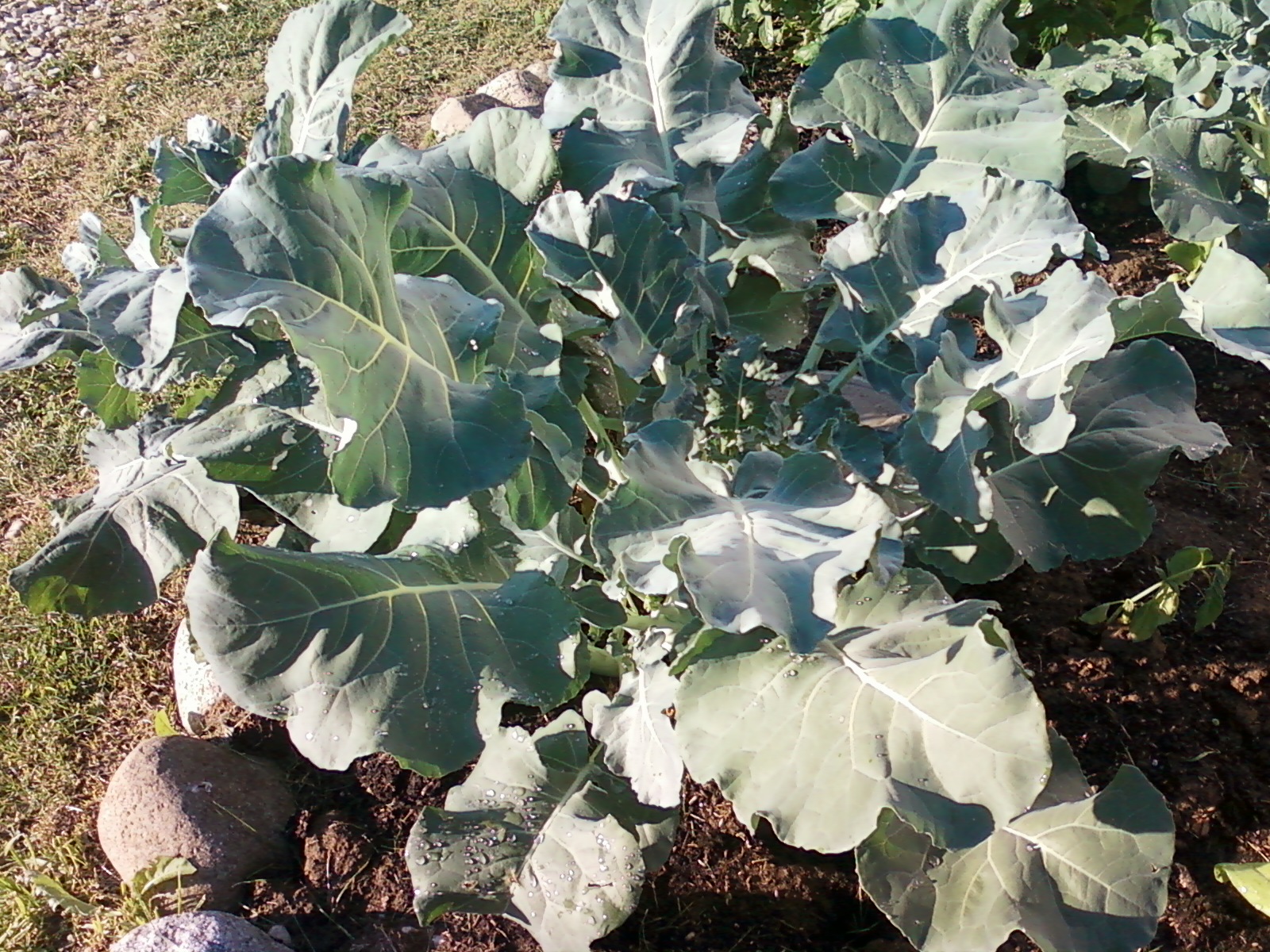
Plastic milk jugs or juice bottles with the bottoms cut out of them make perfect free cloches for these broccoli seedlings.
Clear plastic sheeting (a drop cloth, maybe?) makes a great garden protection (that's actually the same piece of plastic that covered the front garden box and kept its contents alive all winter)....
but any color will do, even black.  I just need to make sure to uncover this as soon as possible in the morning so the plants don't cook once the sun is hitting it directly again!
Tarps offer a little heavier duty protection, as do blankets of any sort, such as the fleece ones here.   I didn't bother covering my berry bushes since, being relatively native (?) to this habitat, I'm pretty confident they can handle it and I didn't cover the chives because I'm pretty sure chives are indestructible!
I've also used plastic wrap tacked into place to protect plants on some really cold nights, but a lot of my plants are already getting too big for that!

Oh, and I bit the proverbial bullet and checked the temperature outside:  it is currently 32 degrees out (as of 1am), with a lot of hours of night left to go.  It might get as low as the lower 20s this morning, so let's hope my "crop condoms" are enough!

Sunday, February 19, 2012

Zombie Gardening

When I say the phrase "zombie gardening", I think the image that pops into people's minds is probably something like this
If you were hoping this is what I was talking about, they are available on Amazon
but I'm being more liberal with my definition of what sorts of corpses are being reanimated.  This is what I'm currently including in my zombie garden:
According to gems I've found on the best time-sucker ever, Pinterest, the corpses of all of these can be reanimated into new plants, that will eventually provide new food!

Chop off the top of a pineapple with a bit of core still attached and stick it in the soil:


Save the pit of an avocado and suspend it with toothpicks in water to grow a new tree:


Cut off the bottom of grocery store celery, stick it in the soil, stalk side up, and grow an easy new celery plant!:

For the sweet potato, cut it in half (longways) press into moist soil and cover them with plastic:


I mentioned my plan to start a zombie garden to my dad, and he told me there is in fact a whole book out there about it!  The book he mentioned is called The After-Dinner Gardening Book.  When looking for this book on Amazon, I discovered there is another book out there like this as well: Don't Throw It, Grow It!: 68 windowsill plants from kitchen scraps. I definitely will be seeking these books out from the library to try to grow my zombie (plant) army!

Friday, January 27, 2012

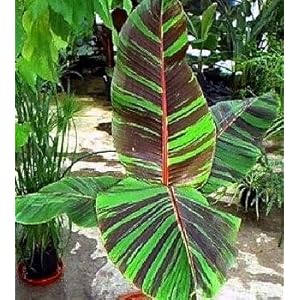
This Sh%# is BANANAS!


Image blatantly from Amazon, where you can buy these seeds
The USDA released a new, updated plant hardiness map this week, for the first time in years.  According to the new map, we are now in zone 6a instead of 5b!  For those in warmer climates, you might not understand how exciting this is in terms of the plants we can grow here (although not exactly thrilling because of the broader implications of climate change!).  I can't even count how many times through my relatively few years of gardening that I've wistfully looked at some plant or another in a seed catalog and wished I could grow it here, but it just wasn't possible, at least not outdoors.  When I saw this change in hardiness status, I had to see what I could add to my possibilities.

Some, like avocados and lemons were decidedly long shots and, as expected, it is still much too cold here (give it 50 years or so) to grow these in Michigan.  I did have one super exciting discovery of something I could grow here: bananas!  That's right: it is possible to grow bananas in Michigan.  Not all varieties, mind you, but there are one or two edible varieties that will put up with the cold temperatures and possibly (with a much increased chance, now that we are considered zone 6!) of actually bearing fruit.  After doing a big of research, I decided I wanted to grow Darjeeling bananas.  From what I've read, it is hardy up to zone 5, but is unlikely to produce fruit in anything lower than a 6 or 7.  Sounds like a worthwhile gamble to me (especially since a reader of this blog was generous enough to fund this project)!
Pretty, too!
Here's a minor hitch though: according to the lease, I can't plant trees, bushes, or shrubs (notice: nothing in the lease says I can't have a garden, like some people who stop by this blog from time to time seem to have trouble wrapping around their brains) without management approval and I don't know that banana trees are part of their vision for the trailer park.   However, containers are allowed.  That's why there isn't an issue with my blueberry and raspberry bushes, because they are in planters.  So, I'll be growing bananas in planters.  Yes, it is possible.  Apparently, a 15-gallon or larger planter is a suitable home for these banana-beasts.  That will also give me more options for winter storage.  I can either mulch the heck out of it (building an insulated box around the base or something to keep the roots warm too) or move it into a warmer location, like inside an out building like a garage or barn.  Plus, when we move, assuming I (or the cold) haven't killed it off, we can take it with us!  How's that for bananas?

I do have one confession though.  I don't like bananas.  I don't see that as a problem with this project though, since A) everyone else in my family loves bananas, B) these are not the same variety as store bought bananas, so I'm sure they would taste different, and C) if you'd only ever had a store-bought tomato, could you actually say that you didn't like tomatoes?

One last thought, further proof I've gone bananas:  I'm also going to grow pineapples this year, but more about that in a future post.

Wednesday, January 4, 2012

2011 in Review: What went right

If you were hoping for my information on my plans to stockpile a year's supply of food, like where I plan on putting it all, I'm afraid you'll have to wait a while longer.  First, I want to review the good things that happened in my life in 2011.   Last year was one of the best of my life in many ways and I want to take a few minutes to share some of the great things that happened last year before getting too far into this year.

First off, I think my garden was pretty darn amazing.  If I had the technical skills to do it, I would put a slideshow of the garden pictures on the blog throughout the year in chronological order, set to some cheesy music like Boyz II Men's It's So Hard to Say Goodbye to Yesterday, but I lack those skills, so here are a few of my favorite pictures of last year's garden:


To see more of the garden and what a small space this is all in, please check out my video tour I did in July

In addition to the garden, I learned a number of cool new skills, from making yogurt, making ricotta cheese, canning with both a water bath canner and pressure canner, making lip balm, making felt food, and "harvesting" chickens, to how to write and maintain a blog, including a number of fairly technical goodies like making my button available for stealing (available on the side bar, if you do what to steal it).  I'm glad 2011 ended when it did, because I'm pretty sure I must have reached the limit of data storage in my brain for one year!

Besides all the things I did, I met a ton of cool people through this blog and feel a real sense of community every time I go to my Facebook page.  That sense of community blossomed into an unbelievable showing of love, support, and assistance when I didn't know how our family was going to make it toward the end of the year when things got really rough.  For that, I can't even begin to thank you, but I have to at least try:  Thank you. Thank you.  Thank you.

I'm also proud of my family's accomplishments in 2011, from the youngest learning to walk to my daughter's beautiful dance recital performance, my (now, as of 2012) 7 year old's help in the garden and progress on learning to read, my oldest son's progress on playing the piano and violin, to my husband's getting a couple deer to help feed the family for the year.  I am truly blessed.
~~~~~~~~~~~~~~~~~~~~~~~~~
This post was inspired by the Simplify Your Life Challenge at Home Life Simplified

Monday, September 5, 2011

Saving Seeds 101

Even in the midst of the canning and preserving frenzy that is the prime harvest season of early fall, my thoughts are turning to next year's garden.  As I clean out the remnants of this year's garden, I am thinking ahead to what I might want to do differently next year.  As I put up my garden's fruits, I'm also putting up seeds for next year.

The longer I garden, the more excited I get about heirloom seeds.  It is a beautiful thing to realize that as I obtain more heirlooms, I have to buy fewer seeds in future years if I just think ahead a little bit and save some of what I have for next year.  Unlike hybrids, which may not breed true to produce the same exact plant next year, heirlooms will produce the same variety as the parent plant, so investing in heirloom seeds gives you a lifetime supply of food of that type with just a little care.  If your descendants are into gardening, you can actually feed them for their lifetimes as well by giving them some of your precious heirloom seeds.

Last year, the only heirlooms I had were some nameless snap beans that a friend's ancestors had brought over from Italy (I call them magic beans because they have such cool origins and they are purple and green on the vine but turn green when you cook them), some Ace 55 tomatoes that I bought at a store, and some moon and stars watermelon that a friend had given me.  I didn't bother saving the tomato seeds, since it is a messy, smelly, involved process and I didn't really need to since I still had so much of the seed packet left.  I did save some bean seeds and watermelon seeds though, and this year's beans and watermelons are offspring of last year's harvest.

This year, I have many more heirlooms including more Ace 55 tomatoes (left over from last year's seed packet), Brandywine tomatoes (given by a friend), the watermelon and beans I saved from last year's harvest, Aunt Molly's ground cherries (bought from Seed Savers), black beauty zucchini (bought from Seed Savers), two varieties of corn--blue jade and a green dent corn with an unspellable and unpronounceable full name (bought from Seed Savers), and Amish snap peas.  I bought the snap peas from Seed Savers this year, but I'm already into a second generation of them, since I saved seeds from the spring crop for planting in the fall. 

I'm not sure if I will be saving the tomato seeds since it is kind of an icky, pain-in-the-hind-end process, from what I understand, plus I have to look into whether I actually can or if the varieties of tomatoes I have cross-pollinate.  I know I won't save any blue jade corn, because it didn't work out well for me so it isn't worth the bother.  Technically, I can't save the green dent corn because it was grown in such close proximity to other varieties of corn, but I may anyway, just not claim that it is pure of that strain, since there is no way for me to know for sure if there was cross pollination.  The zucchini I won't be saving seeds from since the squash vine borers killed my plants before I was even starting to think about seed saving, but I still have quite a few seeds left in the packet I bought this year to save for next.  I do know that I can save the watermelon, ground cherries, beans, and peas though and save them I will.

The peas and beans are super easy to save.  I just needed to make sure no other varieties were planted too close so they'd cross pollinate, then let them fully mature, and dry out on the vine.  The first part is easy, since I only had one variety of each growing on my lot and I can be pretty darn confident that no one else in the trailer park was growing either.  The second part is a teensy more difficult since A) I have to make sure the kids don't eat them all, leaving none for seeds and B) you don't want to let them mature like that too soon or the plant will think its job is done and it will die, so it needs to happen toward the end of the season.  Once they are completely dried out, peel open the leathery pod and pull out the seeds.

The watermelon (and other melons, but I've never saved seeds from other melons) is a tiny bit more difficult, but not much.  When the kids and the husband eat a watermelon (not me, since I don't actually like watermelon), they need to make sure as many seeds as possible end up in a bowl or other container, rather than swallowing them or spitting them all over the yard.  Once they are collected, they need to be washed off and left out on a paper towel to dry completely before being stored away.  When saving watermelon, it is important that no other varieties were grown within about a 1/2 mile, but, again, I'm confident that no one else in the trailer park was growing watermelon this year, so it isn't something I was worried about for my seeds.

Ground cherries kick it up another notch on the difficulty scale, from what I understand.  I haven't actually done it yet, but I plan to this week, but from what I understand, you stick some ground cherries in a blender with a bit of water and blend.  The pulp will float up and the good seeds will sink down.  Then, you just wash them off and dry completely on a paper towel before storing away for the winter.

Thursday, July 28, 2011

The Fall Planting is DONE--a mini-Trailer Park Hometead update

My little helper pulled out 2 onions by himself!  Both of them knocked him backwards, he had to pull so hard to get them out of the ground!
I may be a bit behind my self-imposed (well, maybe Mother Nature imposed, but whatever.  I have ways to thwart her for a while when it comes to gardening!) timetable for getting the fall planting done, but I did it!  Well, mostly did it.  I got everything in the ground that needs to go in the ground, but I still have some containers to fill once I pick up some more compost from a friend's house.  I'm not too worried about getting such a late start on those though, since I can haul them inside on cold nights, either the house or garage, depending on how much I value them to avoid nasty freezes that would kill off the frost resistant cold weather crops that I'm planting now, as weird as that seems with the next few days to be forecasted to be in the 90s again!

I started the day with the brilliant idea that I should clean out the worm bin.  We've been getting some horrid little fly things in our bathroom lately, which is right across the hall from the laundry area, where the worm bin was stored (that's right: I said was).  I figured if I cleaned it out, I could get rid of any nasty flies, maggots, and anything else in there, use the castings in the garden to refertilize areas that had something just growing in them, then start the worm bin fresh ucky-critter-free.  When I went through the slimy (hint that something was seriously wrong!) contents of the bin, I only found one worm!  There were bunches just a few months ago, but I managed to kill them all off (wormicide?  Wormslaughter?  Does this carry criminal penalties, and if so, should I really be talking about it on my blog?).  I figured with just one bad-boy (girl?  Both?  Not sure how that really works with worms, since you can't see any dangly bits to tell you) wormy in there, it probably hadn't properly taken care of...whatever I put in there, I probably should just toss the whole mess, worm and all, in the regular compost bin outside and let nature take its course out there.  I'll try again with vermicomposting in the winter, when I have more time and don't want to be running outside all the time to take out compostables!

Fortunately, at this point I still had some alternative compost I could use to add nutrients back to the soil, so I happily (no remorse!  Didn't even mourn the poor critters!  That definitely sounds like maybe 3rd degree wormicide at least.  If it was wormslaughter, I think there would be some more remorse) started harvesting and ripping out plants that no longer served a purpose (the heat wave last week turned all my lettuce super bitter!), making room for the fall planting (that I was terribly behind on).  I ended up pulling the second to last broccoli plant, the last of the peas (just left there for seed anyway) and harvesting a couple gallon buckets of onions, about a quart of carrots, 8-9 cucumbers, a few handfuls of ground cherries, a tiny head of broccoli (soup!  Yay!), a zucchini, and about a pint of beans.
Many beans, ground cherries, and cucumbers were gobbled right off the plants and so are not pictured here
Since it is supposed to rain the next few days, I spread the onions out on my work area in the garage to cure before putting them away...somewhere for long term storage.  I probably should figure out where I'm going to keep them for the long haul sometime in the next few days!
Overall, I'd say that isn't too bad for such a tiny area to garden.  Especially when you consider that many of my larger crops of things such as tomatoes, cucumbers, beans, potatoes, and ground cherries either are just starting or haven't ripened at all yet!

Once I got the areas that had the ripped out cleaned up, weeded, and put some fresh compost down, I planted a bunch of carrots, spinach (okay, that isn't late at least, but I'm hoping to be able to freeze some for this winter, so was hoping to sneak in at least a couple plantings of the stuff), and snap peas.  I also transplanted the cabbage and broccoli I had previously started (almost on time!) to their new spots in the garden.  So now I'm officially done!  I can sit back and relax *snort*...okay, we all know that isn't going to happen!  So now I'll work on other projects, probably mostly indoors with 90+ degree temps predicted for a few days and then it will be time to do more stuff outside, then inside, then outside....yeah, I don't know the meaning of relaxing, do I?

Friday, July 15, 2011

The War on Gardens Continues

When Julie Bass's lawyer went to the courthouse to file a motion regarding the case against her "renegade" front yard gardening activities, he was informed that the charges against her for the garden had been dropped.  Yay!  Right?  Wrong.  Now, they've slapped her with some trumped up charges for dog licenses that she's already paid and she still has a hearing on July 26, but now for the dog license misdemeanor charge (did I mention that there is no unlicensed dog at her house now and the only way that they would even know there ever was unlicensed dogs on her property was if Oak Park a-holes were looking for something to charge her with since her dogs are well taken care of and don't run loose in the neighborhood?).  Not only that, but since Julie never had her day in court or was officially cleared of "wrongdoing" (seriously, is a garden ever "wrongdoing?"), they can bring the charges back up once the media spotlight has cleared back up.  Tricky bastards, aren't they?  Let's not make it that easy on them, shall we?  We've been doing a great job with the calls and emails (not so much with the death threats and such though.  That's too much and I wouldn't be surprised if that's part of why they are being such...looking for a nice word....bureaucrats.  Okay, I couldn't come up with an actual nice word, but that one is at least allowed on television), so let's keep the pressure on until they are leaving the Bass family alone for good!  For your convenience, here is the contact info for key players in this nonsense:

Mayor:
Gerald E. Naftaly 248.691.7410      gnaftaly@att.net

City Council:  all phone calls go to 248.691.7410
Angela Diggs Jackson   adjack@comcast.net
Paul Levine   paul4oakpark@yahoo.com
Emily Duplessis   duplessis2@aol.com
Oakland County Prosecutor:
Jessica R. Cooper   248-858-0656  info@oaklandprosecutor.org

Meanwhile, up in Canada, a man is currently facing the prospect of six months in jail for his lovely organic mini-farm on his 2.5 acres!  Dirk Becker of Lantzville, British Columbia has been cited with violating a bylaw against property owners letting their land become "unsightly" and has been ordered to "remove the piles of soil and manure from the property".  Again, the whole thing is rather ridiculous, to put it nicely, and you can click here to see how insane it is, including seeing pictures of before he took ownership of a property that was basically a gravel pit and the gorgeous farm he turned it into that apparently city officials find "unsightly."  Either they have vocabulary issues on par with Kevin Rulkowski's definition of "suitable" or they have something against plant matter!  Now, I'm not too familiar with how the Canadian political system works, but I did find a general office number for the District of Lantzville (250-390-4006) and a general email being listed as district@lantzville.ca, so we might want to give them a heads up that food growing is a good thing and plants are far more beautiful than a barren wasteland, eh?  (I'm from Michigan, so I can do the whole "eh?" thing too.  It isn't a Canada joke, really...although that is kind of funny)

As this insane war on gardens continues, it reiterates the point I made a couple weeks ago that there should be a recognized Right to Garden everywhere.  I listed the contact info, or at least how to find the contact info for US Congress people on my original Right to Garden post, so if you wanted to pursue making this a federal law in the United States, that would be a good place to get started. Canadians, since this seems to be a problem for you too, you might want to get in touch with your government as well!

Saturday, July 9, 2011

Planning The Fall Garden

My "St. Patty's bed" will be one of the first areas to receive a fall makeover
I can't believe it is that time already, but I probably should be starting to think about what I'm going to be planting in the fall garden.  Actually, looking at this and referring to the charts in the back of the All New Square Foot Gardening book, I'm actually running a bit behind!  According to that, I should have already started my fall crop of broccoli, since that should be started about 16 weeks before the first frost and we're already nearly 12 weeks until the first expected frost!  Oops.  I guess I really need to get cracking on my plans!

The entire back bed will be available for fall planting
So, I plopped down with some scrap paper yesterday afternoon to put together the Great Fall Garden Plan of 2011...then, after a few drawings and scribbles, realized I was being silly.  Realistically, I'm not going to follow such a plan.  I'll end up doing what I always do--harvest things then look around and say to myself "hmm, what has time to grow in this spot?" and plant whatever I feel Mother Nature will let me get away with growing.

With that in mind, rather than neatly diagrammed illustrations of what will go where when, here is a list of when I can put in what, according to the SFG book (except for the rutabaga, since that isn't included in the book.  I had to get that info off the seed packet).  This is not a complete list, but rather just what I'll be planting.

Could stick something here
Plant: weeks before first frost to plant (deadline for my location):
Broccoli: 16 weeks start seed, transplant out at 9 weeks (getting a late start, transplant by August 1)
Cabbage: 16 weeks start seed, transplant out at 9 weeks (getting a late start, transplant by August 1)
Rutabaga: 13 weeks (getting a late start! Planting today!)
Carrots:  11 weeks (July 18)
Peas:  10 weeks (July 25)
Lettuce:  7 weeks (August 15)
Spinach:  7 weeks (August 15)

The book also gives dates for cauliflower (14 weeks, transplant at 8), beets (8 weeks), and radishes (4 weeks), but I'm not planning on growing any of those.

That broccoli coming out will make lots of room for something else
In addition to planting these things specifically for the fall, I'll still have summer crops coming in.  Tomatoes, cucumbers, green peppers, zucchini, corn (maybe, not sure when this will be finished), and melons should still be able to be harvested right up to the first frost, maybe even longer if I cover them up on frosty nights--one of the nice things about having small garden beds all over instead of one large garden monster planted in rows!  I should also have green beans, winter squash, and pumpkin that is planted now after the first frost, even without covering them up.  So while it is a little depressing planning for fall already, it is exciting to think about all the great garden produce I still have to come!
With two indeterminate tomato plants, two cucumber plants, and two green pepper plants in this garden box, this will be a high priority area to protect from the first few frosts.  There is already rutabaga growing on one side as part of the fall planting, but the carrots and broccoli being removed soon will open up another 7 square feet of gardening space, which, when gardening as intensively as I do, that's a lot of garden space!  I'm guessing I'll use it for three more broccoli plants (where the carrots are now) and 64 more carrots (where the broccoli is now), but I may very well change my mind!


Wednesday, July 6, 2011

Focus on the Front Yard--a Trailer Park Homestead update

With the hulabaloo (sounds nicer than "nonsensical misdemeanor", doesn't it) about Julie Bass's front yard vegetable garden in Oak Park, MI, I thought it would be suitable (wait, if the Oak Park city officials are using an "obsolete" definition of "suitable", does that mean that the city officials of Oak Park are obsolete and need to go, either by being fired or voted out, depending on their positions?)  to explore what I have growing in my front yard.  Not the herbs and flowers that I'm growing for food or medicinal purposes, since I doubt Oak Park city pricks, er, I mean city officials, would have a problem with those, just the fruits and vegetables.  Since this is just a tiny trailer park lot and not a full on yard, the "front yard" is defined (by me) as the area from the road up to the front door of the trailer.  As you can see from the view from my front door, looking out toward the street:
That yellowness is my 6 year old looking for carrots for a snack
And from the street, looking up toward the house:
this is not a large area!  Yet, in that area, I am growing the following:
cucumbers (in 3 different locations in the front yard),
watermelon,
zucchini,
cantaloupe,
green peppers (3 plants, spread out over 2 different areas),
carrots,
tomatoes (about a dozen plants, spread out over several areas),
several raspberry bushes, a blackberry bush,
3 blueberry bushes,
broccoli (in 2 different places in the front yard, about 8 plants total),

rutabaga (so tiny because they are part of the fall planting),
pumpkin,
snap peas (although they are looking pretty awful.  I'll probably pull these this week to make room for more fall plantings of...something),
lettuce,
ground cherries,
and a few strawberries.
So, as you can see, front yard gardening isn't strange, weird, or "unsuitable" as plant material...and you can grow a lot in a little space if you get creative about it.  I hope I didn't take too big of a risk showing you this, since, as Julie Bass pointed out to me on her blog the other day, "i hope the oak park code enforcers don’t drive out to webberville to ticket you- after all, we know they are comfortable exceeding their authority ;-)".